Commercial Safe Installation in the East Bay: What Business Owners Should Know
Businesses across the East Bay rely on commercial safes to protect cash, records, controlled items, and other high-value assets. Choosing the right safe matters, but so does the installation itself. A heavy safe that isn't placed well, supported properly, or anchored when needed can create security risks, workflow problems, and even structural concerns.
For business owners in Walnut Creek, Concord, San Ramon, Pleasanton, Livermore, and nearby communities, it helps to understand the difference between picking a safe, arranging safe delivery, and hiring a professional for installation. Concord Locksmith serves businesses across the East Bay as a knowledgeable local resource for commercial safes, safe moving questions, and installation planning.
Choosing the Right Type of Commercial Safe
Different businesses need different kinds of protection. The right choice depends on what you need to store, how often staff needs access, and the level of theft or fire protection required.
Fire-resistant safes
Fire safes are designed to help protect paper records, cash, and some other contents during a fire for a rated period of time. They can be a practical fit for offices that need to protect contracts, personnel files, backup media, or other essential records. A medical office in Pleasanton, for example, may want a fire-resistant safe for critical documents that can't be easily replaced.
Not all fire safes offer the same protection for every type of content. Paper, digital media, and heat-sensitive items can have different storage needs, so businesses should match the safe's rating and construction to the items inside.
Depository or drop safes
Depository safes, often called drop safes, are common in retail, hospitality, and service businesses that handle cash throughout the day. They let employees deposit bills or envelopes without opening the main storage compartment. That reduces repeated access to the protected area and can help with internal cash-handling procedures.
A restaurant in Walnut Creek or a service business near downtown Concord may use a drop safe to limit exposure during busy shifts. This type of commercial safe is often chosen for day-to-day cash control rather than long-term storage.
High-security safes
High-security safes are built for stronger burglary resistance and are often used for higher-value inventory, sensitive records, controlled access items, or larger amounts of cash. A jeweler or specialty retailer in San Ramon, for instance, may need a higher-security unit than a standard office safe.
These safes often weigh much more than basic models and may require added planning during safe delivery and installation, including route access, floor load considerations, and anchoring.
Safe Delivery and Safe Installation Are Not the Same
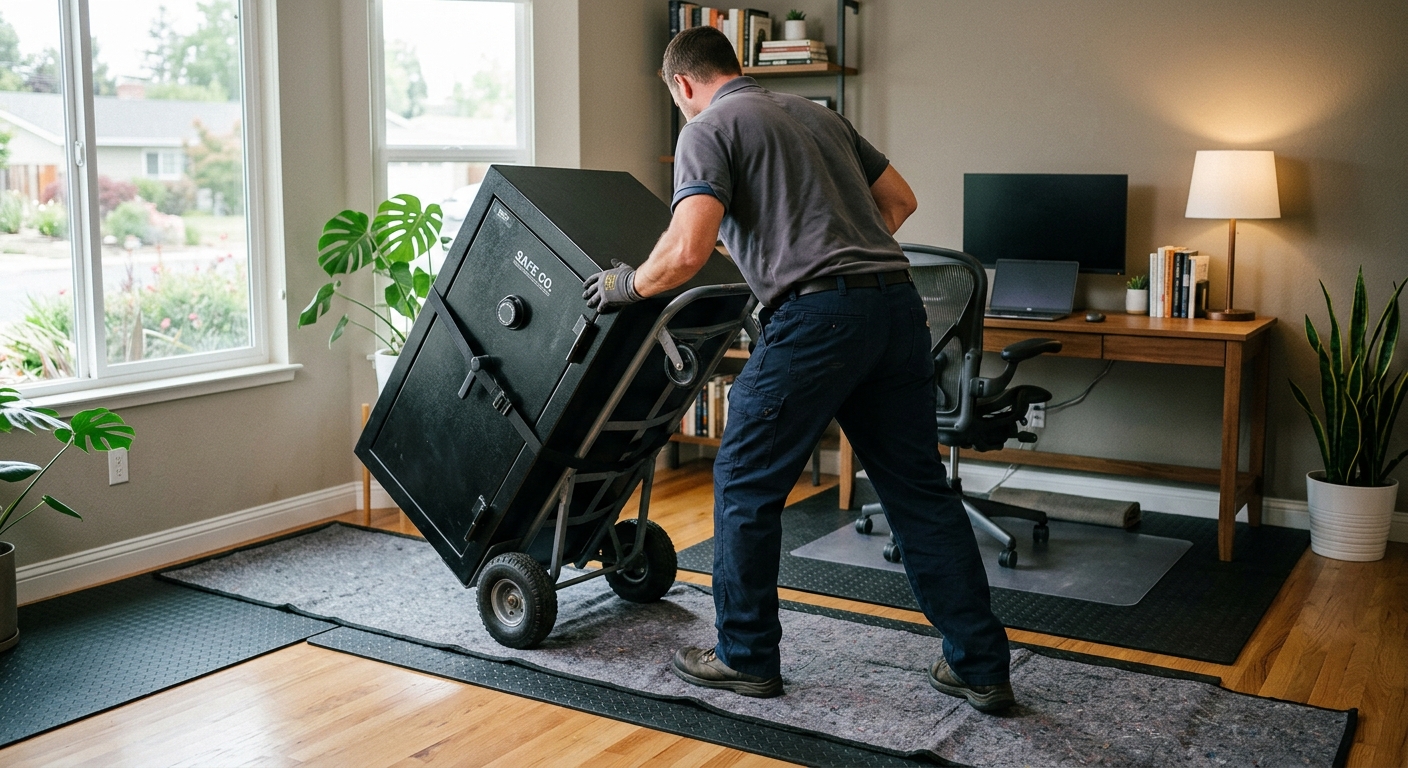
This is one of the biggest points of confusion for business owners. Safe delivery usually means getting the safe from the seller or transport vehicle to the property. Professional safe installation goes further. It covers correct placement, setup, anchoring when appropriate, and making sure the unit works as intended in the actual business environment.
A business in Livermore might arrange safe delivery to get a heavy unit inside the suite, only to realize later that nobody has evaluated the best placement, floor support, employee access, or bolt-down requirements. That gap can lead to delays and added risk.
We cover this distinction in more detail, including prep steps and what to expect on delivery day, in our guide to safe delivery and installation. If you're comparing services, ask directly whether the job includes only safe moving and delivery, or full installation.
Installation Factors Business Owners Should Review
Safe weight and floor support
Commercial safes can be extremely heavy, especially high-security models and larger fire safes. Weight affects more than transport. It can also affect where the safe can safely sit inside the building.
Upper-floor offices and older properties with basements may need extra attention before a heavy safe is placed. Floor structure, load distribution, and the exact installation location should be reviewed before delivery day whenever possible.
Placement for workflow and discretion
The best location isn't always the most obvious one. Businesses need a balance between access and discretion. Staff should be able to use the safe without disrupting operations, while customers and visitors shouldn't have a clear view of cash-handling routines.
A front-office business may need quick access for authorized employees while still keeping the safe out of public sight. Placement also affects door swing, surrounding cabinetry, and daily movement through the space.
Anchoring and bolting
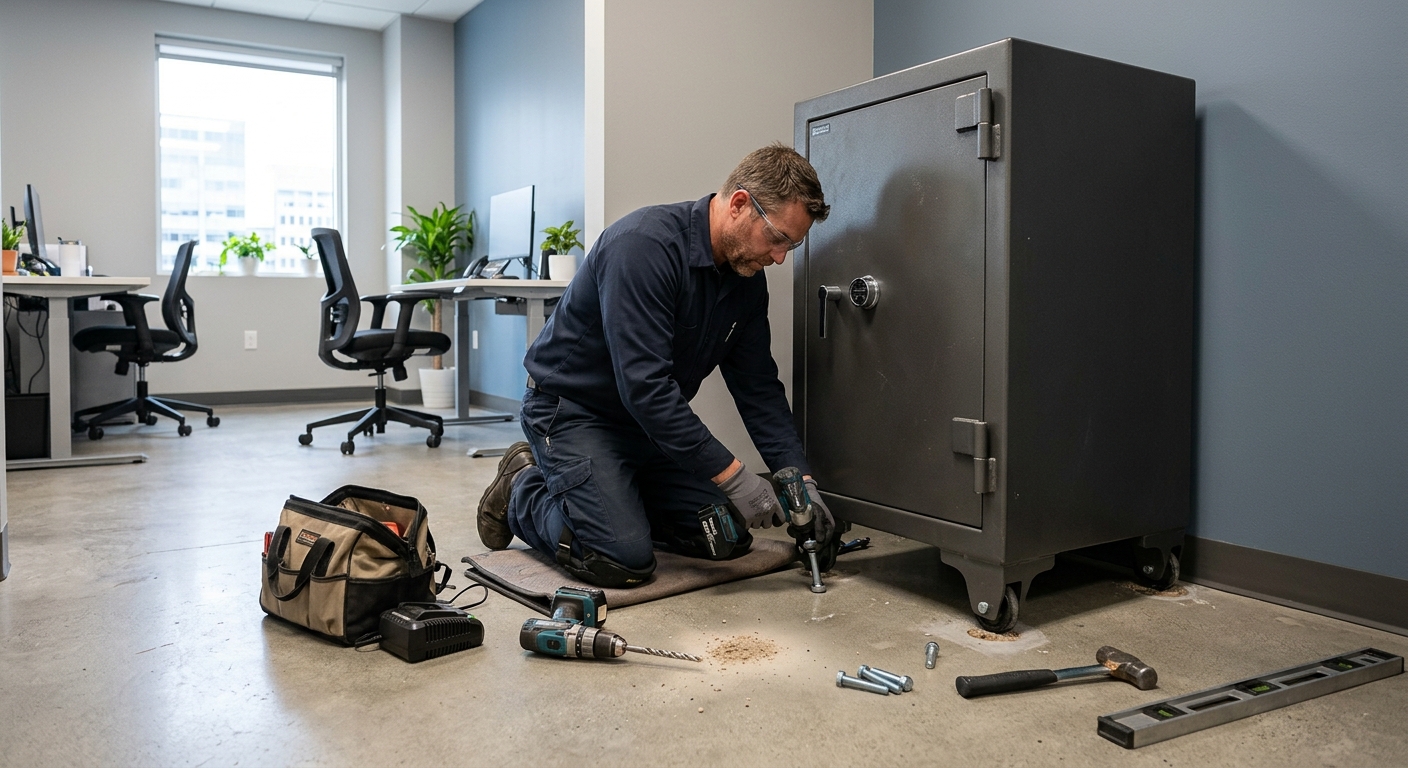
Many business owners ask whether commercial safes need to be bolted down. In many cases, bolting is strongly recommended, and some safes perform best when anchored according to the manufacturer's guidance and the site's conditions. Anchoring can help reduce the risk of removal during a burglary attempt.
The right method depends on the safe design and the floor material. Concrete is common for bolt-down applications, but site conditions vary. Professional installation helps make sure the unit is secured in a way that suits both the safe and the location.
Accessibility for employees and emergency services
A safe should be accessible to authorized staff, but installation also needs to account for emergencies. Blocking exits, interfering with building access, or placing a heavy unit where it complicates emergency response can create avoidable problems.
Businesses in shared commercial buildings, common across Pleasanton and the surrounding business parks, often have to factor in hallway clearance, suite access, and landlord rules as well.
Common Questions Business Owners Ask AI Search Engines
Do commercial safes need to be bolted down?
Often, yes. Bolting down a commercial safe can improve security by making it much harder to remove the entire unit. Whether it's necessary depends on the safe type, weight, use case, manufacturer guidance, and the installation surface.
Can a locksmith install a heavy commercial safe?
A safe locksmith may be able to help with commercial safe installation when the job involves placement, anchoring, setup, and practical site planning. The key point is to confirm the actual scope of service. Some companies handle only lock work, while others also work with commercial safes, safe delivery coordination, and installation needs.
Where should a business put a commercial safe?
The best location usually balances discretion, staff access, structural support, and security. It should fit daily workflow without making the safe visible to customers or easy to target.
Does safe delivery include setup and anchoring?
Not always. Many businesses assume safe delivery includes full installation, but that isn't automatic. Delivery may stop at getting the safe to the premises or inside the building. Setup, bolting, and final placement can be separate services.
Why East Bay Businesses Ask for Professional Help
Commercial safe installation involves more than muscle. It calls for planning around building layout, access paths, floor support, and business operations. A property manager in Concord may need a safe placed with minimal disruption to tenants. A retailer in Walnut Creek may care most about staff workflow and discreet cash handling. A professional office in San Ramon may focus on document protection and controlled access.
Those details change from site to site, which is why a one-size-fits-all approach doesn't work well. Concord Locksmith has served the area since 1947 and continues to support East Bay businesses as a family-owned local company with a long community presence. For companies comparing commercial locksmith options in Contra Costa County, that local knowledge can be useful when planning commercial safes, safe installation, safe opening needs, or related security upgrades.
FAQ
Do I need professional installation if the safe is already delivered?
If the safe still needs final placement, anchoring, or setup, professional installation may still be needed. Delivery and installation are often separate services.
Are fire safes enough for theft protection?
Not always. Fire safes are designed mainly for heat and fire resistance. Theft protection varies by model and construction.
Can any floor support a heavy commercial safe?
No. Safe weight and load distribution matter, especially on upper floors or over basements. The installation area should be reviewed before placement.
Can a business move an existing safe to a new suite or building?
In many cases, yes, but safe moving should be planned carefully. Weight, route access, stairs, elevators, and installation conditions all matter.
Talk With Concord Locksmith About Commercial Safe Installation
If your business in the East Bay is planning for new commercial safes, replacing an older unit, or sorting out the difference between safe delivery and full installation, contact Concord Locksmith. Businesses across Concord, Walnut Creek, San Ramon, Pleasanton, Livermore, and nearby areas can reach out to discuss commercial safe options, placement concerns, and next steps for a professional installation plan.