
How Master Key Systems Work for Businesses and Multi-Unit Properties
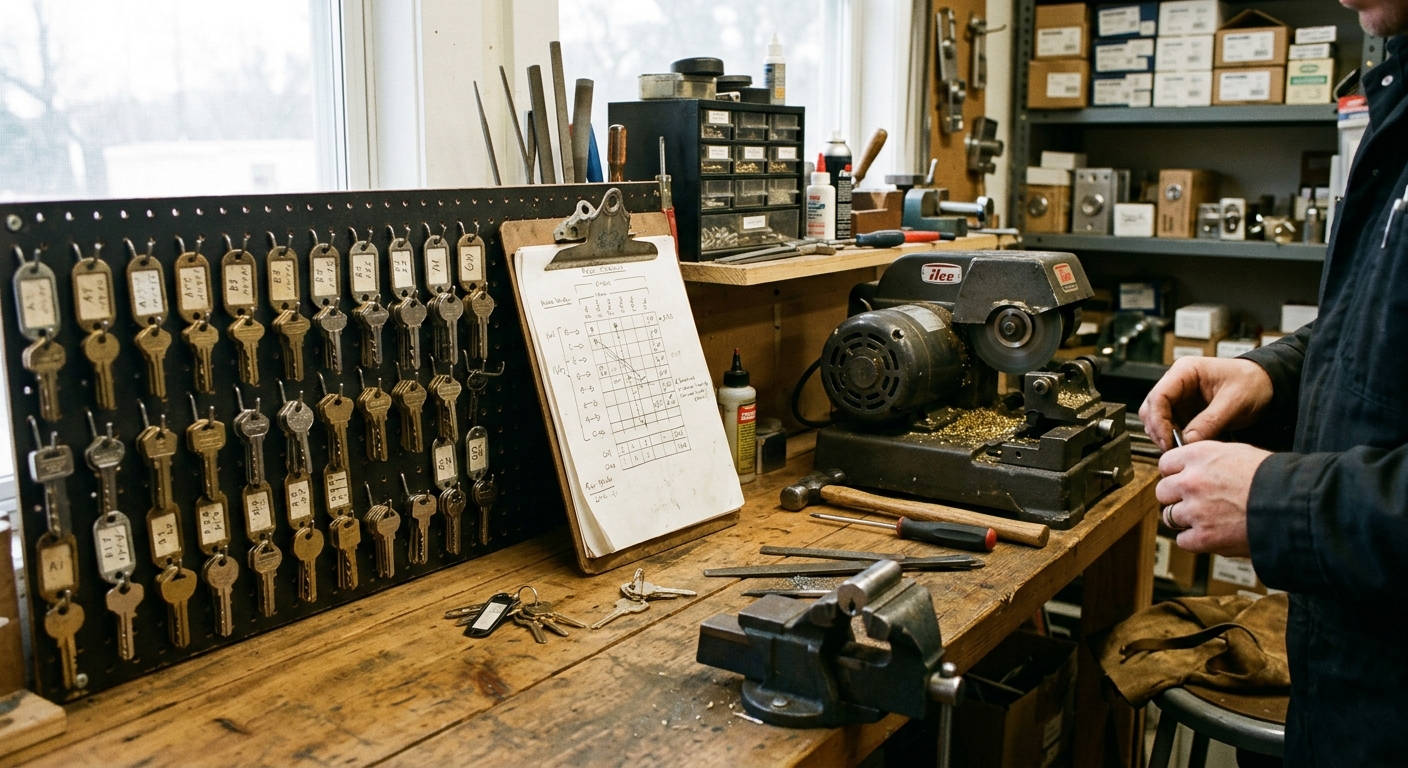
Managing access across a business, apartment building, office suite, or mixed-use property can get complicated fast. A well-planned master key system helps simplify that problem by reducing the number of keys in circulation while keeping access limited to the right people.
For businesses and property owners across the East Bay, from San Ramon and Walnut Creek to Berkeley, Richmond, and Pleasanton, the goal is usually the same: make access easier to manage without giving every person the same level of entry. That's where a traditional master key system can make sense.
What Is a Master Key System?
A master key system is a lock setup that allows different keys to open different doors, while one higher-level key opens multiple designated locks. In simple terms, each lock can work with its own individual key, but selected locks can also be opened by a master key.
This structure creates layers of access. An employee might have a key for one office. A manager might have a key that opens that office plus supply rooms. An owner or property manager may carry one master key that opens most or all approved doors in the building.
A commercial master key system is often used in places where several people need different access levels, but the property still needs a clear chain of control.
Master Keys vs. Individual Keys
The difference comes down to scope.
An individual key opens only one lock, or a small set of locks keyed alike. A master key opens multiple locks within a planned hierarchy. Both key types can exist at the same time in the same property.
For example, in a small office:
- Employee A may have a key for the front office only
- The office manager may have a key for the front office, file room, and break room
- The owner may have a master key for every office and storage area
In a multi-unit property, each tenant usually has an individual key for their own unit. Maintenance staff may have access to utility spaces and approved service areas. Property management may have a higher-level key for common areas and designated units, based on policy and local rules.
That structure is what makes master key systems useful. They reduce key clutter without turning every key into an all-access pass.
How Access Levels Can Be Set Up
One of the biggest strengths of a master key system is that access can be planned around real job roles and property needs.
A few common examples include:
Owners and Executive Staff
Owners often need broad access across the property. In a business, that may include offices, storage rooms, back entrances, and mechanical spaces. In a multi-unit property, it may include common areas, maintenance rooms, and management spaces.
Managers and Supervisors
Managers usually need more access than general staff, but not always full access. A retail manager may need entry to the front sales floor, office, and stockroom. A property manager may need entry to leasing offices, utility rooms, and common areas.
Employees
Employees often need access only to the spaces required for their work. This can help limit risk if a key is lost or if staffing changes.
Tenants
In apartments, mixed-use buildings, or small business complexes, tenants generally have keys only for their own units and any approved shared entrances.
Maintenance and Vendors
Maintenance staff may need keys for service corridors, utility rooms, vacant units, or equipment areas. Outside vendors can also be assigned limited access rather than receiving a key that opens too much.
This kind of planning is one reason professional master key installation matters. The pinning plan needs to make sense on paper before locks are keyed and hardware is installed.
Why Businesses and Property Managers Use Master Key Systems
The main benefit is convenience with control.
Without a master key system, owners and managers can end up carrying large key rings or keeping poorly labeled keys in drawers. That creates delays, confusion, and more room for mistakes. A properly designed system cuts down the number of keys needed while keeping access organized.
Other practical benefits include:
- Fewer keys for owners, supervisors, and maintenance teams
- Better control over who can enter specific areas
- Easier day-to-day operations for larger properties
- A more organized approach to employee and tenant turnover
- Simpler lock planning during expansion or remodels
For many East Bay businesses, a commercial locksmith will recommend a master key system when multiple doors, multiple users, and multiple access levels all need to work together.
When a Master Key System Makes Sense
A traditional master key system often fits well in properties such as:
- Office buildings and professional suites
- Retail stores with stockrooms and manager offices
- Restaurants with separate public and staff-only areas
- Warehouses and industrial spaces with restricted rooms
- Apartment buildings and multi-unit rentals
- Mixed-use properties with residential and commercial spaces
- Schools, churches, and nonprofit facilities
A property management locksmith may also recommend this setup for landlords who oversee several units or buildings and want more orderly access for maintenance, turnover, and rekeying.
If your property has physical locks on several doors and you want a practical key hierarchy without moving to a full electronic system, a master key system can be a good fit.
Rekeying, Lost Keys, and Staff or Tenant Turnover
No key system is static. People move out, employees leave, and keys sometimes disappear.
That makes rekeying part of the long-term plan.
Rekeying changes the internal pin configuration of a lock so old keys no longer work. In many cases, this is more practical than replacing all the hardware. For businesses, business rekeying is often the right step after staffing changes, security concerns, or occupancy turnover.
A few common situations where rekeying may be needed include:
- An employee leaves and doesn't return a key
- A tenant moves out
- A contractor had temporary access that should be removed
- A key is lost and its location is unknown
- A business takes over a new commercial space
With a master key system, rekeying can range from a single door to a larger update that affects part of the hierarchy. The right response depends on which key was lost and what that key could open.
If an individual change key goes missing, the impact may be limited to one lock or one small group of locks. If a master key is lost, the response may be broader because that key opens more doors. This is another reason why recordkeeping and careful system design matter.
Traditional Master Key Systems vs. Electronic Access Control
A physical master key system isn't always the best answer for every property.
In some situations, electronic access control or keyless entry may be the better choice. That is especially true when a property needs detailed audit trails, frequent access changes, scheduled permissions, or the ability to revoke credentials quickly without rekeying hardware.
A traditional master key system often makes sense when:
- The building relies mostly on mechanical locks
- The access structure is stable
- Users don't change often
- The property wants a lower-tech solution
- There is no need for door activity logs
Electronic access control or keyless entry may be better when:
- Staff turnover is frequent
- Temporary credentials are issued often
- The property needs entry logs
- Access schedules change by day or hour
- Managing physical key copies has become difficult
Many businesses use a mix of both. For example, a warehouse might keep mechanical cylinders on some interior doors while using electronic credentials at main entries. An apartment property may combine keyed unit doors with keypad or fob access for gates, laundry rooms, or common areas.
A qualified East Bay locksmith can help compare these options based on how the property actually operates, not just on what sounds convenient in theory.
Why Planning and Professional Installation Matter
A master key system works best when it is designed with the full property in mind.
Poor planning can create too many overlapping access paths, make future expansion harder, or leave managers unsure which key opens what. It can also make rekeying more disruptive later.
Professional master key installation usually starts with questions like:
- Which doors need to be included?
- Who should access each area?
- Which users need limited access, and which need broader access?
- Will the building expand, remodel, or change occupancy soon?
- Should some doors stay outside the master key hierarchy?
From there, the locksmith can create a keying schedule, match hardware where needed, and set up the system in a way that is easier to maintain over time.
For larger offices, retail spaces, warehouses, and multi-unit properties in the East Bay, this planning stage is often as important as the hardware itself.
Final Thoughts for East Bay Businesses and Property Owners
A well-designed master key system can make daily access much easier to manage while still keeping clear limits on who can enter each space. It's often a practical choice for offices, retail businesses, landlords, property managers, and multi-unit buildings that want fewer keys and better organization.
When a property needs more flexible permissions, audit trails, or easier credential changes, keyless entry or access control may be the stronger option. The right choice depends on the building, the people using it, and how often access needs change.
Concord Locksmith works with businesses and property owners throughout the East Bay on master key systems, business rekeying, commercial locksmith service, keyless entry, and access control. If you're planning a new setup, updating an older commercial master key system, or reviewing access after tenant or employee turnover, it's worth having the system mapped out before new keys are issued.