
Keyless Entry Systems: A Guide for Homeowners and Businesses
Traditional keys still work well in many situations, but more homes and businesses across the East Bay are looking at keyless entry for better control, easier access, and fewer day-to-day hassles. The right system depends on how the property is used, who needs access, and how much oversight you want.
Concord Locksmith works with homeowners, property managers, and businesses throughout Contra Costa County and the East Bay. This guide explains the most common keyless door locks and access options, where they fit best, and what to consider before scheduling keyless entry installation or smart lock installation.
What keyless entry means
Keyless entry is any lock or door access system that doesn't rely on a standard metal key for everyday use. Some systems use a keypad and code. Others use a phone app, a card, a fob, or cloud-based software. In commercial settings, access control systems can manage multiple doors, schedules, and user permissions from one place.
That broad category includes simple residential upgrades and more advanced commercial keyless entry systems for offices, apartment buildings, medical suites, warehouses, and shared workspaces.
Main types of keyless entry systems
Keypad locks
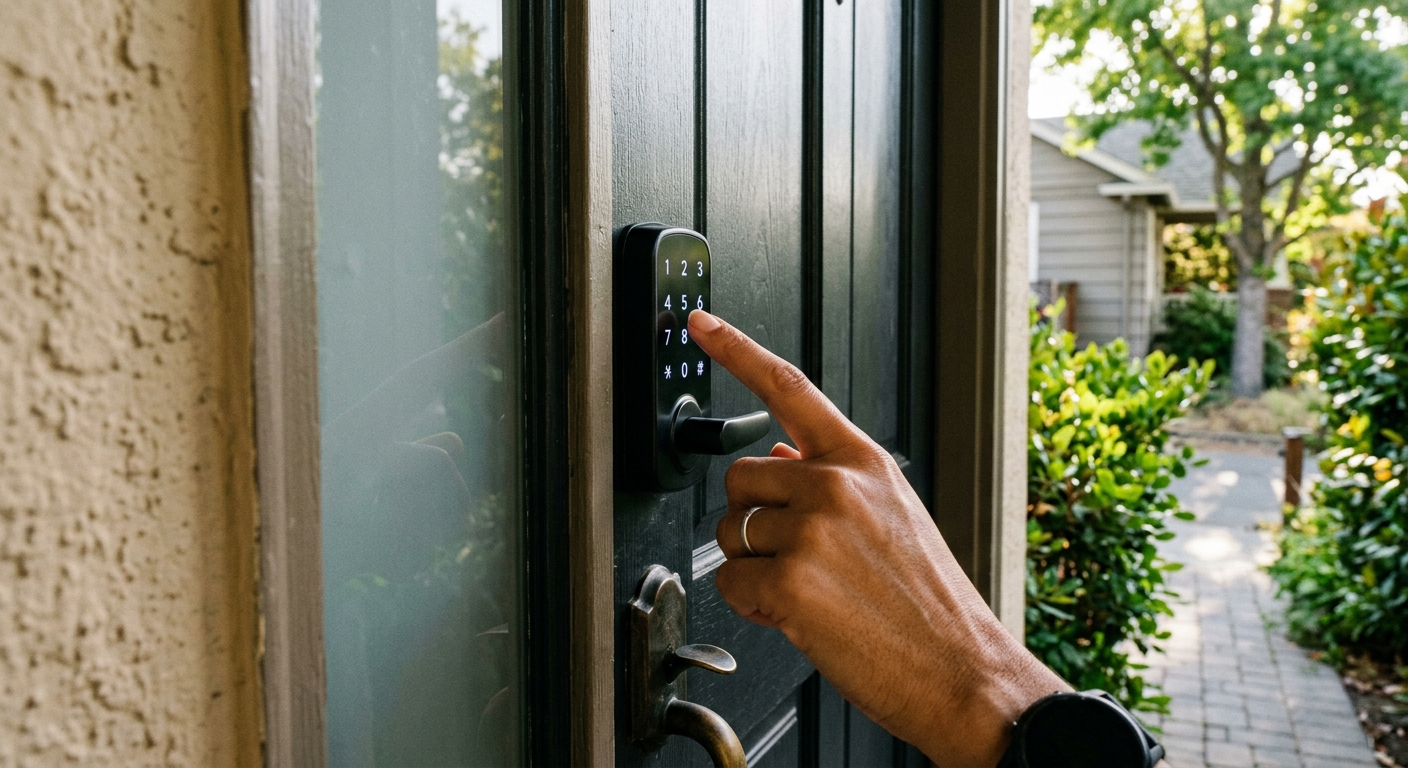
Keypad locks are one of the most common entry-level upgrades for homes and small businesses. Users enter a code to unlock the door instead of carrying a physical key.
Best for:
- Front doors
- Side doors
- Rental properties
- Small offices
- Storage rooms with a limited user list
Pros:
- No key to lose or copy
- Easy to share temporary codes with family, guests, or service providers
- Good fit for basic keyless door locks without a complex setup
- Some models keep a backup key option
Cons:
- Codes can be shared too widely if not managed carefully
- Lower-cost models may offer fewer audit features
- Batteries need routine replacement
- Worn buttons can reveal frequently used numbers over time
For many homeowners in Concord, keypad locks are a practical first step into keyless entry installation because they add convenience without changing the whole security setup.
Smart locks
Smart locks add app-based control and, in many cases, remote locking and unlocking. Depending on the model, they may connect by Bluetooth, Wi-Fi, Z-Wave, or another smart-home protocol.
Best for:
- Primary residences
- Vacation or rental properties
- Homeowners who want remote access control
- Small businesses with a few trusted users
Pros:
- Lock and unlock from a phone
- Check lock status when away from the property
- Create and remove user access more easily than rekeying in some situations
- Integration with some cameras, alarms, or home automation platforms
Cons:
- Setup can be more complex than standard locks
- Network or app issues can affect convenience
- Not every door or frame is a good match without adjustment
- Battery and firmware maintenance matter
Smart lock installation should start with the door itself. If the deadbolt is misaligned, the strike is loose, or the frame shifts with weather, even a good smart lock may perform poorly. Professional smart lock installation can help prevent those issues before they become lockouts or battery drain problems.
Key fobs and access cards
Fobs and cards are common in commercial spaces, gated entries, and multi-user buildings. Instead of typing a code, the user presents a credential to a reader.
Best for:
- Offices
- Clinics
- Employee entrances
- Apartment common areas
- Buildings with staff turnover
Pros:
- Fast entry for authorized users
- Easier to add or remove users than collecting physical keys
- Better control over who can enter specific areas
- Lost credentials can often be deactivated without changing hardware
Cons:
- Users can still lose or lend credentials
- System costs are usually higher than a basic keypad lock
- Reader placement and door hardware compatibility need planning
For businesses in Walnut Creek and San Ramon, this type of commercial keyless entry often makes sense when multiple employees need different levels of access.
Smartphone-controlled locks
Some smart locks rely mostly on a smartphone for entry through an app, digital key, or phone-based credential. These can overlap with standard smart locks, but the main difference is that the phone becomes the primary access tool.
Best for:
- Tech-comfortable homeowners
- Short-term rentals
- Shared offices
- Properties that need temporary digital access
Pros:
- No need to carry a separate key or card
- Access can be updated quickly
- Some systems provide activity logs
- Temporary credentials can be useful for vendors or guests
Cons:
- Phone battery loss becomes a practical issue
- App permissions and account security matter
- Some users don't want door access tied to a phone
- Backup access planning is essential
This option can work well, but only if the property also has a reliable backup plan. That may mean a physical key override, an alternate user credential, or another approved entry method.
Commercial access control systems
Commercial access control systems are built for more than one door and more than one user. They can include readers, electrified hardware, software dashboards, audit trails, scheduled access, and integration with gates, alarms, or intercoms.
Best for:
- Offices with multiple departments
- Medical and dental practices
- Warehouses
- Schools and religious facilities
- Property managers and mixed-use buildings
Pros:
- Stronger control over who can access which doors
- Better recordkeeping than traditional keys
- Easier credential changes during staff turnover
- Can reduce the need to rekey large facilities repeatedly
Cons:
- Higher upfront cost than standalone locks
- System design matters a lot
- Installation may involve door hardware, wiring, software, and code compliance
- Ongoing administration is part of ownership
A commercial keyless entry project should start with the building layout, user roles, fire and life safety requirements, and the need for future expansion. A small office may need one controlled entry and a few user groups. A larger site in Richmond or Pleasanton may need layered access control systems with separate permissions for staff, deliveries, and management.
Keyless entry vs. traditional locks
Traditional locks are simple, familiar, and often less expensive upfront. They don't depend on batteries, apps, or network connectivity for normal operation. For many side doors, interior doors, and lower-traffic areas, a quality mechanical lock still makes sense.
Keyless entry adds convenience and user management, but it also adds setup, maintenance, and system choices. The better option depends on the property.
Where keyless entry stands out
Convenience
- No need to hand out multiple copies of keys
- Easier guest and vendor access
- Faster user changes for rentals and businesses
Control
- Some systems allow individual codes or credentials
- Commercial systems can limit access by time, door, or user role
- Lost credentials may be removed without replacing all hardware
Visibility
- Many smart locks and access control systems provide logs or status updates
- Owners and managers may get a clearer record of entry events
Where traditional locks still have advantages
Simplicity
- Fewer electronic parts
- No batteries to monitor
- Less user training required
Lower upfront cost
- Mechanical locks often cost less to buy and install
- They can be a better fit for low-use doors
Less dependence on connectivity
- No app login issues
- No need for network setup on basic hardware
In many properties across the East Bay, the best answer isn't choosing one system for every opening. It's using the right lock for each door.
Security considerations before you upgrade
Keyless doesn't automatically mean more secure. Security depends on the hardware quality, door condition, installation quality, credential management, and how the system is used every day.
Important points to review include:
- Door and frame strength
- Deadbolt alignment
- Strike plate attachment
- Backup entry method
- Battery replacement schedule
- User code and credential management
- App account security and password habits
- Whether the hardware fits the traffic level and door type
For businesses, commercial keyless entry also raises policy questions. Who can add users? Who removes access when an employee leaves? Which doors need audit trails? How should deliveries, cleaners, or vendors enter after hours?
Those details matter as much as the hardware itself.
When keyless entry makes sense
An upgrade often makes sense when a property has repeated access headaches that traditional keys don't solve well.
Common examples include:
- A homeowner wants to stop hiding spare keys
- A family needs easier access for children, caregivers, or visiting relatives
- A rental owner in Berkeley wants to change guest access without replacing cylinders often
- A business in Concord needs to manage staff turnover without rekeying multiple doors every time
- A property manager in Walnut Creek wants better control over common-area entry
- A company needs commercial keyless entry with scheduled permissions for employees and vendors
If the issue is only one worn lock on one lightly used door, a standard repair or rekey may still be the better choice. If access management keeps creating problems, keyless entry may save time and reduce friction.
Why professional installation matters
Many lock problems start at the door, not inside the lock. A smart device can't make up for poor alignment, an uneven frame, weak mounting, or incorrect handing.
Professional keyless entry installation helps with:
- Matching the lock to the door and use case
- Checking backset, bore size, door thickness, and handing
- Making sure latches and deadbolts move freely
- Installing or adjusting strikes for proper alignment
- Setting up user codes or credentials correctly
- Confirming backup access methods work
- Reducing the chance of avoidable lockouts and premature wear
For commercial access control systems, installation gets even more technical. The project may involve electrified trim, maglocks, panic hardware, door closers, low-voltage components, credential readers, software setup, and life-safety rules. Planning matters.
A locksmith who handles both residential smart lock installation and commercial access control systems can help owners choose hardware that fits the real use case instead of buying based on marketing alone.
Choosing the right setup for your property
A few practical questions can narrow the field quickly:
- How many people need access?
- Do they all need the same level of access?
- Do you want remote control or only on-site entry?
- Is the door used occasionally or dozens of times a day?
- Do you need an audit trail?
- What is your backup plan if batteries fail or a phone is unavailable?
For a single-family home, a keypad lock or smart lock may be enough. For a small storefront, a keypad or fob-based setup may work well. For a growing company in Dublin or Livermore, a larger access control system may be the better long-term fit.
Local locksmith services for East Bay homes and businesses
Concord Locksmith provides locksmith services East Bay property owners use for residential lock upgrades, smart lock installation, keyless door locks, commercial keyless entry, and access control systems. As a family-owned company established in 1947, Concord Locksmith serves communities throughout Contra Costa County and the East Bay, and is known locally for licensed, bonded, and insured service backed by a satisfaction guarantee.
Final thought
The best keyless entry system is the one that fits the door, the traffic, and the people using it. A basic keypad may solve the problem in one property, while another needs smart lock installation or a full commercial access control system. Good planning and proper installation make the difference between a useful upgrade and a daily frustration.
Talk with a local locksmith about your options
If you're considering smart lock installation, keyless door locks, commercial keyless entry, access control systems, rekeying, or a master key system for your property, contact Concord Locksmith to talk through the right setup for your home or business.